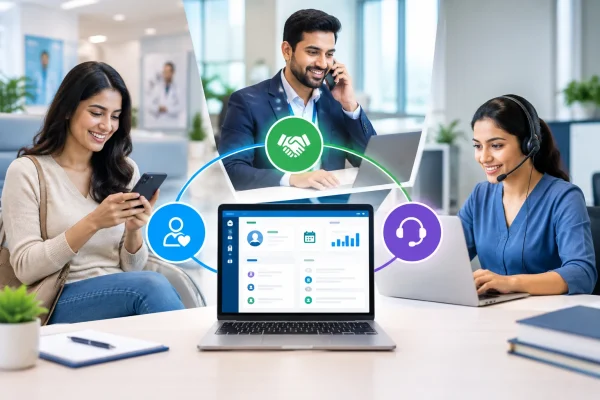

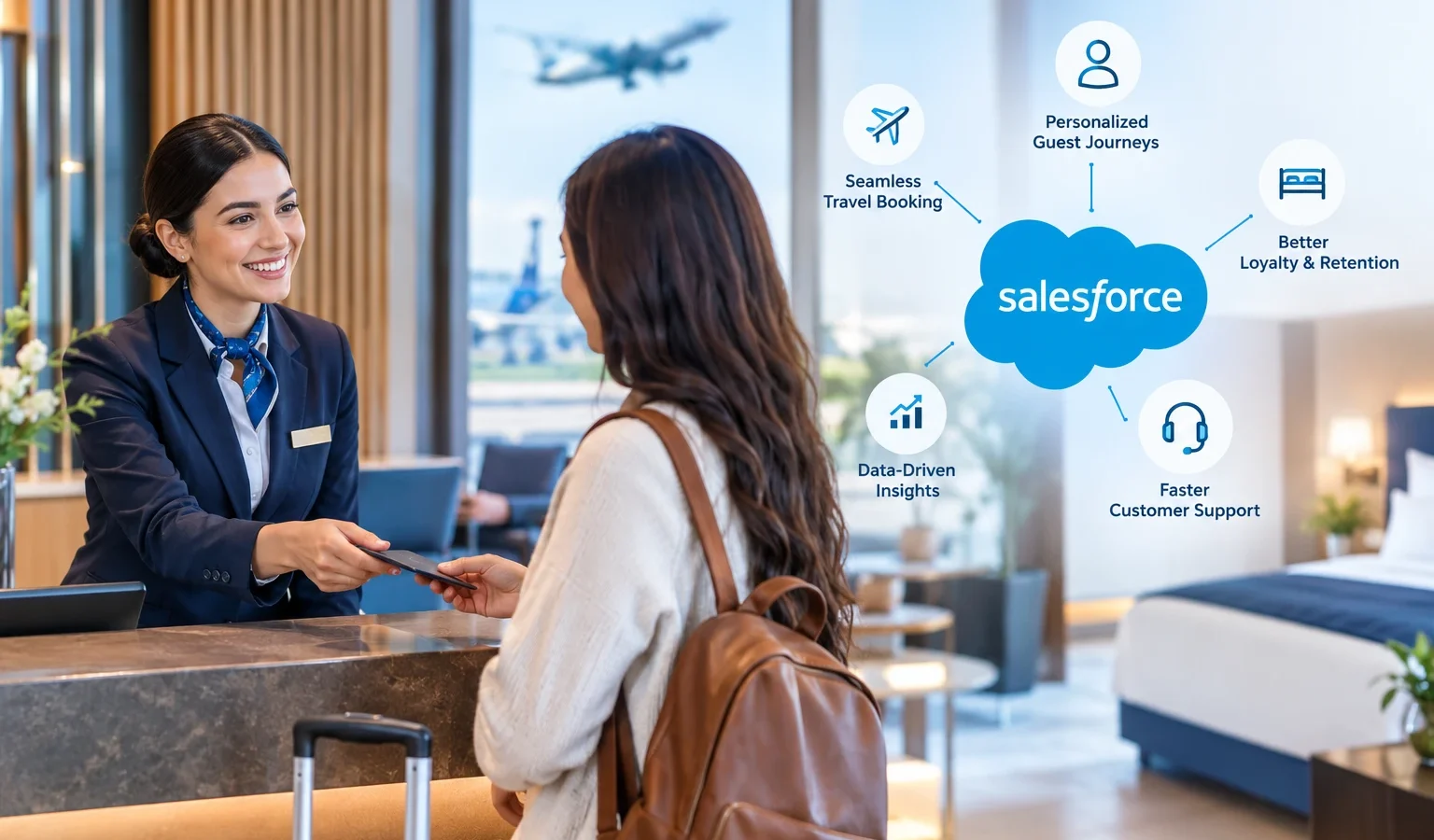
The customer makes a reservation for a hotel room, followed by two phone calls altering the dates. The customer then informs during the check-in process of a nut allergy. Two days after leaving, the guest receives an email asking for a review of the stay without any mention of any of the above information. Frustrating isn’t it? This is where Salesforce CRM comes in handy for the travel and hospitality industry. Salesforce hotel solutions integrate all booking calls, preferences, and feedback into one record.
Why CRM Matters in Travel and Hospitality
Today, there is an expectation of being remembered. The results of a 2026 research on traveling revealed that 74% of travelers seek personalization. Also, in a hotel survey, 68% claimed that some personalized elements will help retain them rather than the bonus points. It is an enormous change.
If your front desk, call center, and marketing team have their own information on the customer, then the customer will feel it. That is why more and more people see CRM for Travel and Hospitality not as something additional, but as the basis of their business.
What Is Salesforce for Travel and Hospitality?
Think of one profile per guest. Past stays, bookings, special requests, complaints and chats all sit in one spot. Salesforce is the platform behind it, and it fits hotels, airlines, agencies and tour companies. It also has AI agents now, called Agentforce, which answer the basic questions and hand anything tricky to a real person.
Key Challenges Facing the Travel and Hospitality Industry
Honestly, the problems look the same almost everywhere. Data sits in different systems. The booking engine doesn’t talk to the front desk software, and the email tool keeps its own list.
Loyalty programs are losing steam too. Research from 2025 found that about half of hotel members feel their program doesn’t deliver anymore.
Then there’s the money side. India’s travel market grew just 1% in 2025, to $41.7 billion, and online agencies still take most digital bookings. Getting guests to book with you directly is tough when you barely know them.
How Salesforce Transforms Customer Experiences
Four tools do most of the work. If you want them set up around your own business, our Salesforce CRM Development services team can do that.
360-Degree Guest View with Data Cloud
Data Cloud gathers information from your reservation systems, your website, your mobile application and call center to build a single profile. This way, the second time a businessman enters your premises, your reception desk already knows that he prefers the silent floor.
Personalized Marketing with Marketing Cloud
Sending one offer to 50,000 people rarely works. With Marketing Cloud, the guest who booked the spa last time gets the spa package, and the family that came in June gets the beach deal.
Faster, Smarter Support with Service Cloud
The agent opens a case and the whole story is right there. Nobody asks for the booking number a third time. If a flight gets cancelled, rebooking takes minutes because everything is on one screen.
AI-Driven Recommendations with Einstein
Einstein and Agentforce suggest the next offer worth making, reply to common chat questions and flag guests who might not return. Your team still makes the final call.
Top Use Cases of Salesforce in Travel and Hospitality
Hotels and Resorts
Hotel CRM Salesforce captures preferences, return visits, and group sales leads. Whatever hotel CRM solution you end up with, make sure it integrates with your property management system. This is what causes the most problems.
Airlines
Airlines use it for loyalty tiers, delay alerts and rebooking. A stranded passenger should hear from you before they start hunting for a phone number.
Travel Agencies and Tour Operators
Good travel CRM software keeps enquiries, quotes, itineraries and follow-ups together, and it nudges your team when a warm lead goes quiet. CRM for travel agencies often needs a custom touch, since every agency sells a little differently. That’s where Salesforce CRM Development services earn their keep.
Restaurants and Event Venues
Dietary notes, favorite tables, event enquiries and repeat corporate clients go in the guest record. Nobody has to rely on memory.
Salesforce Features That Boost Loyalty and Revenue
In that same hotel survey, 82% of loyalty members said they were frustrated with traditional programs. Points expiring too fast and blackout dates were the main complaints.
A CRM lets you reward what guests actually do. Someone who always asks for a late checkout? Offer it before they ask. Send an upgrade offer just before arrival, when guests are most open to saying yes. Small, well-timed gestures like these often work better than a points balance, and they push guests to book directly. This is also why hotels look at CRM for Travel and Hospitality when their loyalty numbers stall.
Streamlining Operations and Team Collaboration
The sales people, front office staff, housekeeping, and support will be reading the exact same notes. If there is information provided to the call center that it is a guest’s anniversary, the front office already knows about it before the guest checks in and the housekeeping staff may leave something in the room for the guest.
Real-World Benefits and Business Impact
Results will vary depending on your own configuration, so be wary of anyone who gives exact numbers. The majority of companies are looking for quicker responses, less duplication of inquiries, and higher repeat bookings.
The timing helps in India. The hospitality market is estimated at around USD 28 billion in 2026 and could nearly double by 2031, with chains moving into Tier-2 cities. More competition is coming, whether you’re ready or not.
Common Challenges in Salesforce Implementation (and How to Avoid Them)
Most projects stumble in the same four places.
Messy data comes first. Clean your guest records before you import them, or you’ll just move the mess to a new home. Next is over-customizing. Start with one journey, like booking to check-out, and add more once it works.
Staff adoption is the third. If the front desk team isn’t trained early, they’ll drift back to spreadsheets within a month. Last are integrations. Plan the link to your PMS or booking engine at the start, not after launch.
Nearly all of this comes from rushing phase one. A planned rollout with proper Salesforce CRM Development services saves a lot of rework.
Why Choose an Expert Salesforce Partner like Team in India
Your CRM solution can be as effective as the implementation thereof. This partner with expertise in the hospitality industry will correctly map out the path of your guests and will know about the local practices such as domestic travel and chatting on messengers. Not sure how to pick one? We wrote a guide on how to Choose the Right Salesforce Partner for Your Business.
Conclusion
The customer wants to be recognized, and a single profile achieves that purpose. The Salesforce for Travel & Hospitality solution provides a means by which this can be accomplished. Begin small, clean up your data first, then expand from there.