
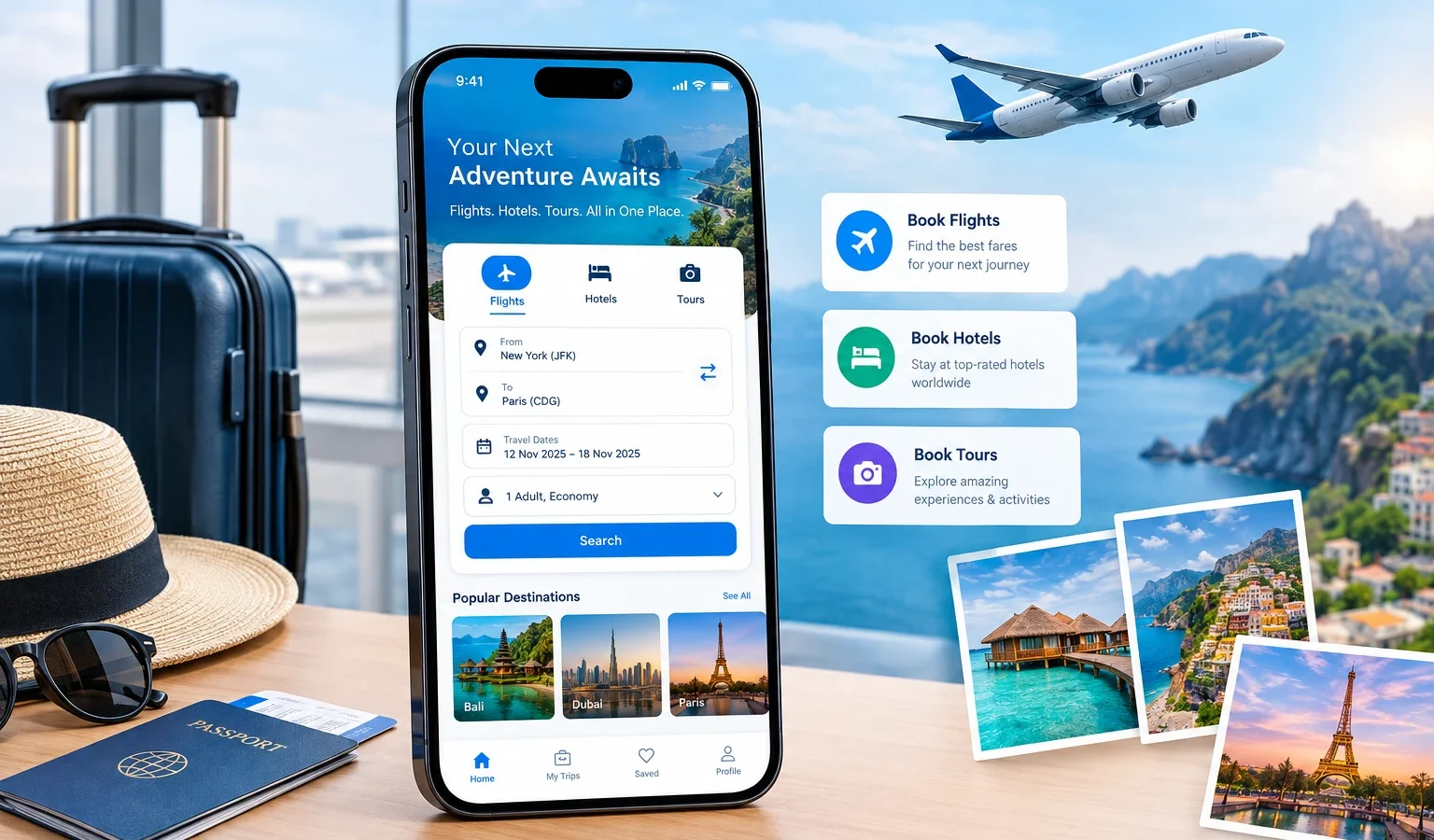
Planning to build a travel app that sells flights, hotels and tours? Then you’ve probably hit the first wall already: where do you even start? A lot of founders we speak to want everything on day one, and that’s usually how budgets go sideways. So here’s how to build a travel app the sensible way. We’ll cover the market, what goes into the first version, how the build runs and what it costs. If you’re also hunting for a travel app development company in India, there’s a short checklist at the end. That applies whether it’s travel booking app development for flights and hotels or tour booking app development on its own. The process is close to identical, just with different suppliers.
Why build a travel app now?
The numbers are hard to ignore. Morden Intelligence expects India’s online travel market to touch roughly $25.4 billion this year and reach about $38.6 billion by 2031. Most of that money moves through phones. Ken Research says apps handled around 73% of completed online bookings in 2025, up from 58% back in 2020. And MakeMyTrip closed FY26 with record gross bookings of $10.39 billion and more than 564 million app downloads.
Does that mean the space is full? Not really. The big apps are built for everyone, which leaves gaps. Think pilgrimage routes, short weekend trips, local guided tours, or people in smaller cities who get a clunky experience on the bigger apps. Find a gap like that first. Price alone won’t carry you.
Pick your app type and first-version features
You’ve got three basic options. A full OTA sells flights, hotels, buses and tours together, which sounds great until you see the bill and the competition. A single-category app does just hotels or just flights. A tour and activity app sticks to local experiences and day trips. If you’re unsure, go with one and grow from there.
What goes in the first version? Search with decent filters, live prices and availability, payments through UPI, cards and wallets, e-tickets, and alerts when a flight changes or a refund lands. A review section and a support chat help too. That’s enough to launch.
Things like an AI trip planner, price alerts or loyalty points can come later. A simple test: if a traveller wouldn’t notice it missing on day one, it can wait.
How to build a travel app, step by step
Nothing special, but the order that works for me most of the time.
- Select an area. Read what people do not like in one-star assessments of competitors, as that is the place your opening is.
- Determine the ways to get inventory, either through APIs or deals with hotels and tour operators.
- Sketch the screens and test them with five real people before anyone writes a single line of code.
- Develop the MVP to include search, booking, and payment features.
- Break it intentionally. Experiment with payment failures, overbooking, and fluctuating fares between search and checkout. These bugs aren’t just in the system, they cost real money.
- One city or one route at a time.
- Track where users abandon your page, and then begin improving that area first.
Tech stack and API integrations
For the app itself, most teams pick Flutter or React Native so one codebase covers Android and iOS. The backend is usually Node.js or Python with PostgreSQL, on AWS or something similar.
The travel side is different. Flights usually come through Amadeus, Sabre or Travelport, or through an Indian aggregator if you want a quicker start. Hotels come from booking APIs or channel managers. For payments, Razorpay, PayU and Cashfree all handle UPI.
One thing catches people off guard. The booking screen is the easy bit. The hard part sits behind it: linking up with suppliers and checking that every booking, cancellation and refund matches what the supplier has on record.
Travel app development cost and timeline
Ask five agencies and you’ll get five prices. Published 2026 estimates mostly land between $15,000 and $150,000+, and Indian teams usually bill around $15 to $55 an hour. Roughly:
| App type | Rough cost (USD) | Timeline |
| Single-category MVP (hotels or tours) | $15,000 to $40,000 | 2 to 4 months |
| Flights + hotels | $40,000 to $90,000 | 4 to 8 months |
| Full OTA with tours and itineraries | $90,000 to $150,000+ | 9+ months |
These don’t cover GDS and API fees, hosting or upkeep after launch. And you will need upkeep, because APIs change and real users find bugs fast. If you’re weighing in-house against outsourcing, our post on the cost to build an app in India goes through the numbers.
How a travel app makes money
Commission is where most apps start: you take a cut of every booking. Some add a small service fee or a markup on fares and rooms. Others sell featured spots to hotels and tour operators who want to show up first, or run ads from travel brands. A paid membership with discounts can work too, but only once you have repeat travellers.
Our suggestion is to launch with commission alone. Suppliers expect it and users understand it. Add the rest one at a time, because each one changes how your prices look and can confuse early users. Trying all of them at launch is a common mistake.
Choosing a development partner
Before you sign with anyone, get answers to a few things:
- Have they built a booking app with live supplier APIs? Ask to see it running.
- Who owns the source code once the project ends?
- What happens after launch? Is support included or billed separately?
- Is the price fixed, or hourly with a cap?
If you want a full team, have a look at our travel app development services. Already have a project and just need more hands? You can hire app developer talent directly and manage the work yourself.
Whatever you pick, start small. A travel app gets better with real bookings, not with a longer feature list. If you’ve got an idea and want an honest take on scope, cost and timeline, talk to the Team in India. Tell us what you’re planning and we’ll tell you what to build first.