

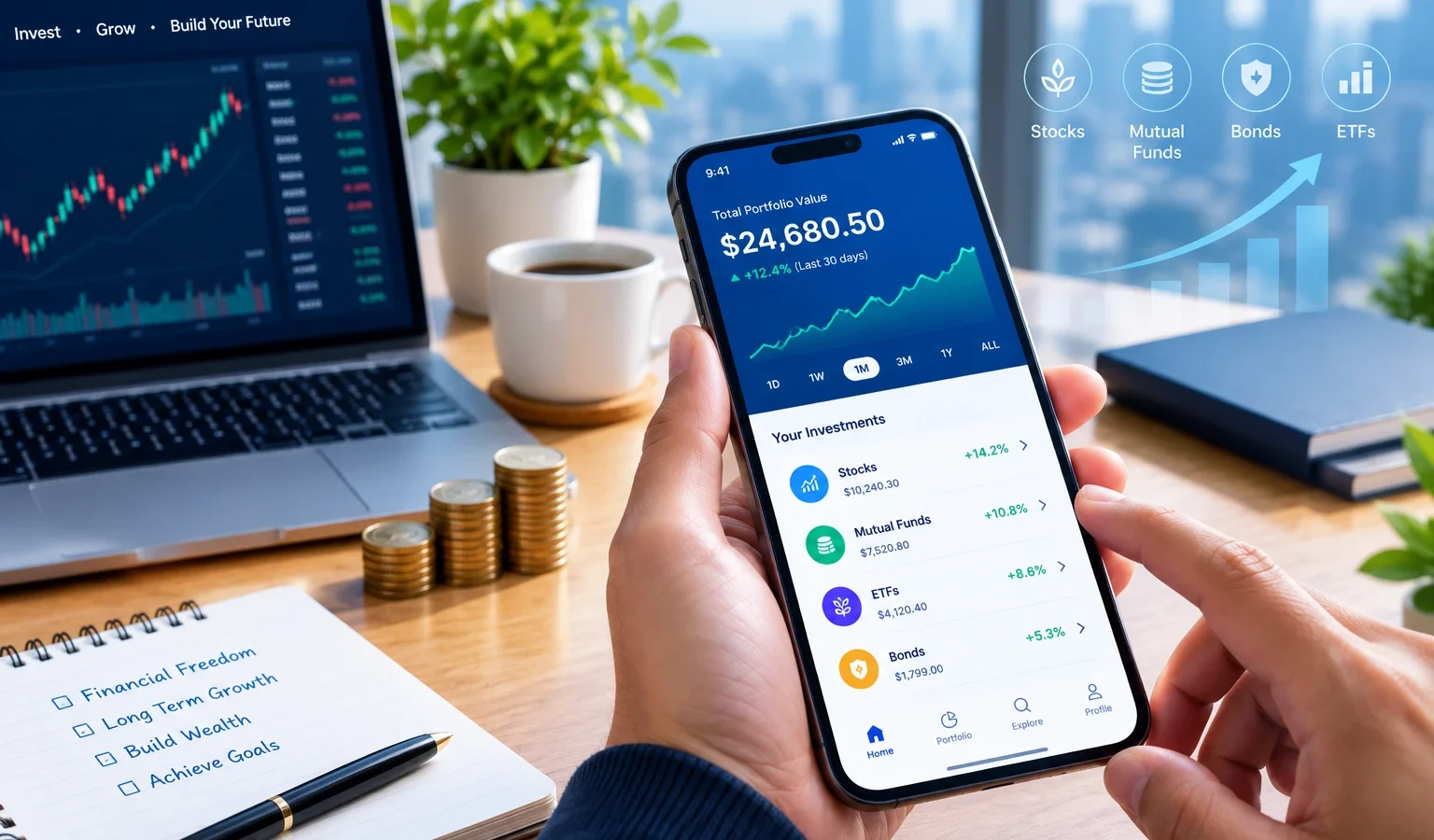
Thinking about building an investment app like Groww or Zerodha? Honestly, the timing is decent. Millions of people in India are investing for the first time, and a lot of them complain about the apps they’re stuck with. If you’re also comparing an investment app development company in India to hand this over to, read this first. It’ll save you a few awkward calls.
Briefly, for an MVP you should be looking at between 25-50L located over a period of 4-6 months. A complete trading platform? Probably over 1Cr and more like a year. Those are rough estimates and not an actual quote.
Why build an investment app now?
India’s demat account count reached 234.4 million in July 2026, with 2.9 million new accounts added that month. That’s a lot of people.
But there’s a catch. Only about 19.4% of those accounts were active as of June 2026. So getting users to sign up isn’t the hard part. Getting them to come back is. Your app has to be easy and useful enough that people actually open it.
What type of investment app should you build?
Pick one lane first. The common ones are:
- Stock trading apps for buying and selling shares
- Mutual fund platforms for SIPs and fund investing
- Robo-advisors that suggest portfolios automatically
- Wealth management apps for high-net-worth clients
- Crypto and gold apps
Trying to do all of it in version one is the fastest way to burn your budget.
Which investment app features matter most?
Every investment app needs these basics:
- Quick onboarding with e-KYC. Aadhaar and PAN verification should take minutes, not days.
- Portfolio dashboard. Users want to see what they own and how it’s doing at a glance.
- Live market data. Delayed prices kill trust.
- Easy payments. UPI and net banking for funding.
- Strong security. Two-factor login, biometrics, and encrypted data.
- Alerts. Price moves, SIP reminders, order updates.
Once the basics work, you can add extras like AI-based insights, goal-based investing (“save ₹20 lakh for a house”), or copy trading. Add these later. Ship the core first.
How do you build an investment app, step by step?
Here’s the order that works for most teams.
- First step:- who’s it for? A college student with 500/month and a 45-year-old retired planning his retirement will have very different screens.
- Second step:- show compliance now, not later. We will cover the rules in a moment, but rules can change the building options you have.
- Third step:- design it. Money apps are clutter! If a user has to hover over something to understand its meaning they will never tap on it.
Then build the MVP, test it hard (security checks and load testing before real money moves), launch, and listen. Your first users will point out problems you never noticed. If you don’t have a team in-house, you can hire mobile app developers who’ve already worked on fintech projects, because the learning curve is steep.
What technology do you need?
| Layer | Common choices |
| Mobile app | Flutter, React Native, or native Swift/Kotlin |
| Backend | Node.js, Java, or Python |
| Database | PostgreSQL, Redis |
| Real-time data | WebSockets, exchange or broker APIs |
| Cloud | Any major cloud provider with Indian data centres |
| Security | OAuth, 2FA, encryption, audit logs |
Pick tools your team knows well. A boring stack that works beats a fancy one that breaks during market hours.
How much does investment app development cost?
Your final number depends on features, platforms, and how many third-party integrations you need.
| Level | What’s included | Estimated cost (India) | Timeline |
| MVP | Onboarding, e-KYC, dashboard, payments | ₹25-50 lakh | 4-6 months |
| Mid-level | Plus advanced analytics, alerts, multiple asset types | ₹50 lakh-1 crore | 6-9 months |
| Enterprise | Full trading engine, robo-advisory, heavy security | ₹1 crore+ | 9-12+ months |
Costs also keep running after launch. Plan for market data fees, cloud hosting, compliance audits, and regular updates.
What are the rules in India?
Here’s where most people begin to struggle, so go through this again slowly.
The SEBI (Stock Brokers) Regulations, 2026 came into effect on 7 January 2026, abolishing the earlier 1992 regulations, and then from 1 April 2026 the SEBI setup for retail algo trading came into effect, requiring two-factor login controls and audit trails to be effected by stock brokers. The SEBI (Cyber Security and Cyber Resilience Structure) (CSCRF) is also applicable to stock brokers, depository participants, asset managers and KYC agencies.
And you can’t just launch a trading app on a whim. Either you get your own broker registration, or you partner with a registered broker. Selling mutual funds needs AMFI registration. Giving investment advice needs RIA registration. KYC, AML checks and data protection come on top of all that.
Speak to a compliance expert before anyone writes code. It’s cheaper than rebuilding later.
How do investment apps make money?
- Brokerage and transaction fees
- Mutual fund distribution commissions
- Subscription plans for premium tools
- Fees based on assets managed
- Interest on margin funding
Most apps mix two or three of these.
Why work with TeamInIndia?
Fintech doesn’t forgive mistakes. Security, speed and compliance all have to work together, and that takes experience. Our fintech app development team has built secure, scalable apps for clients, and we can take you from the first idea to launch, or step in and support the team you already have.
Conclusion
Building an investment app isn’t just about code. It’s about trust. Keep version one simple, take compliance seriously, and give people a reason to come back. Ready to start? Talk to the TeamInIndia team.