
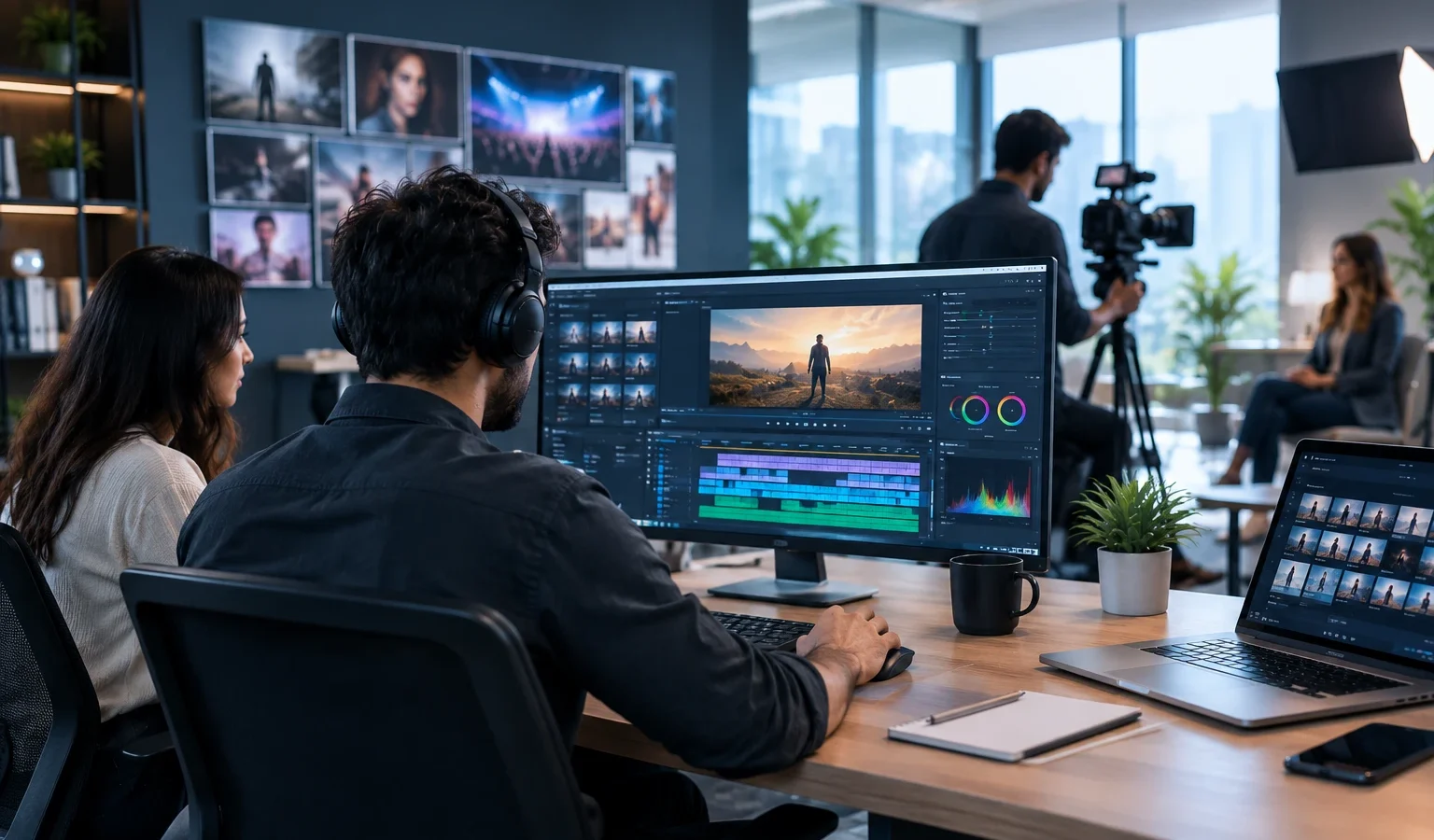
Studios used to run on spreadsheets and physical tape archives. A lot of decisions came down to guesswork what audiences might want, what might work. Things have changed a fair bit since then. A streaming platform, a broadcaster, a gaming studio, all of them now depend heavily on their tech stack, and more often than not, that stack isn’t something bought off a shelf. It’s built for how the company actually works.
That’s basically what custom software for media and entertainment is about. Rather than squeezing content teams, editors, and viewers into some generic tool meant for everyone, companies are building platforms around their own workflows, their own audience, their own content types. And you can see the results in all sorts of places: how quickly a show gets edited, how long a subscriber sticks around before canceling.
Why has custom software become such a priority?
Off-the-shelf tools just don’t cut it anymore, honestly. Media today spans streaming, gaming, publishing, live sports, music, social content and each of those brings its own set of problems. Licensing restrictions, massive file sizes, real-time delivery demands, piracy risks. A stock CMS or a generic analytics dashboard was never built with any of that in mind.
Custom software works because it starts from the actual problem instead of a template. A sports broadcaster needs streaming with almost zero lag. A music platform needs recommendation logic that actually understands listening habits. A studio needs asset management that won’t fall apart under petabytes of raw footage. Generic software was never going to handle any of this well.
What’s going on with streaming platforms these days?
This is probably where the shift shows up most. Streaming now accounts for close to 45% of total TV usage in the U.S., and Netflix alone has crossed 300 million subscribers worldwide. But subscriber count isn’t really the whole story anymore retention is where the real fight is happening, and that’s mostly a tech problem now.
Custom streaming development lets companies build their own recommendation systems, adaptive bitrate streaming, offline viewing, syncing across devices instead of leaning on some generic video player that does none of it particularly well. It’s also part of why ad-supported tiers have taken off the way they have. Netflix has a large chunk of accounts on ad-supported plans now, and that only works because someone built a custom ad-insertion engine that can handle it at scale.
How is content actually managed behind the scenes?
Every media company is sitting on a huge pile of content video files, scripts, artwork, audio, metadata, all of it. There’s no realistic way to manage that by hand anymore, which is why custom content management systems and digital asset management tools have basically become mandatory.
A good CMS does more than just store files somewhere. It tags content on its own, keeps version history straight, tracks licensing windows, and feeds directly into distribution pipelines so content lands on the right platform, in the right region, in the right format without someone manually pushing buttons. For studios juggling thousands of assets across several projects at once, that alone can save weeks.
Where does AI actually come into this?
AI in media and entertainment stopped being a buzzword a while back. The AI in M&E market is expected to cross $35 billion this year, growing at roughly 26% a year, and personalization alone makes up more than a quarter of that spend. Recommendation engines, personalized thumbnails, smarter search, audience analytics all of it gets built directly into custom platforms now, not added on as an afterthought.
It goes further than recommendations too. Studios are using AI for automated editing, dubbing, localization, even parts of virtual production. Some estimates suggest generative AI could cut TV and film production costs by up to 30%. None of that plays nicely with generic software. It has to be part of the platform’s architecture from the start, and that’s really only possible with custom development.
Why do studios keep picking custom builds over ready-made tools?
A few reasons tend to come up again and again with our media clients:
- Scalability — software built for 10,000 users doesn’t just quietly handle 10 million overnight. Custom builds are made to grow with the business.
- Security — piracy and unauthorized redistribution are constant worries in this space. Custom DRM and access controls get shaped around the specific content and distribution model, not some generic template.
- Integration — most media businesses run on a mix of tools billing, CRM, analytics, ad servers. Custom software gets built to actually talk to all of them.
- Speed — entertainment trends move fast, and a custom platform can add features on its own timeline instead of waiting on a vendor’s roadmap.
This is really where a good Media & Entertainment Software Development services partner earns its keep. It’s less about handing over a finished product and more about sitting down, understanding how content actually moves through the business, and building around that. Streaming infrastructure, DRM, CMS, AI-driven personalization all of it needs to function as one connected system, not five separate tools duct-taped together after the fact.
And because these projects touch so many layers: backend, frontend, cloud, DevOps, security most media companies eventually need broader software development services rather than one narrow specialist. Projects rarely stay “just streaming” or “just CMS” for long. Once the first phase works, it tends to grow into something bigger.
That’s also part of why so many companies now choose to hire full-stack developers instead of building a full in-house team from scratch. A single full-stack developer, or a small dedicated pod, can move across the streaming layer, the CMS, the mobile app, and the AI recommendation engine a lot faster than trying to coordinate five different vendors, each owning one small piece.
Conclusion
Media and entertainment isn’t just adopting new technology at this point the technology is reshaping how the whole industry runs. How content gets stored, how AI decides what a viewer sees next, how platforms guard against piracy custom software sits somewhere in nearly all of it.
Companies still leaning on generic tools aren’t just falling a little behind on efficiency. They’re losing ground to competitors who can move faster, personalize better, and scale without things breaking. If 2026 has made anything clear, it’s that in this industry, software isn’t sitting in the background supporting the business anymore.