

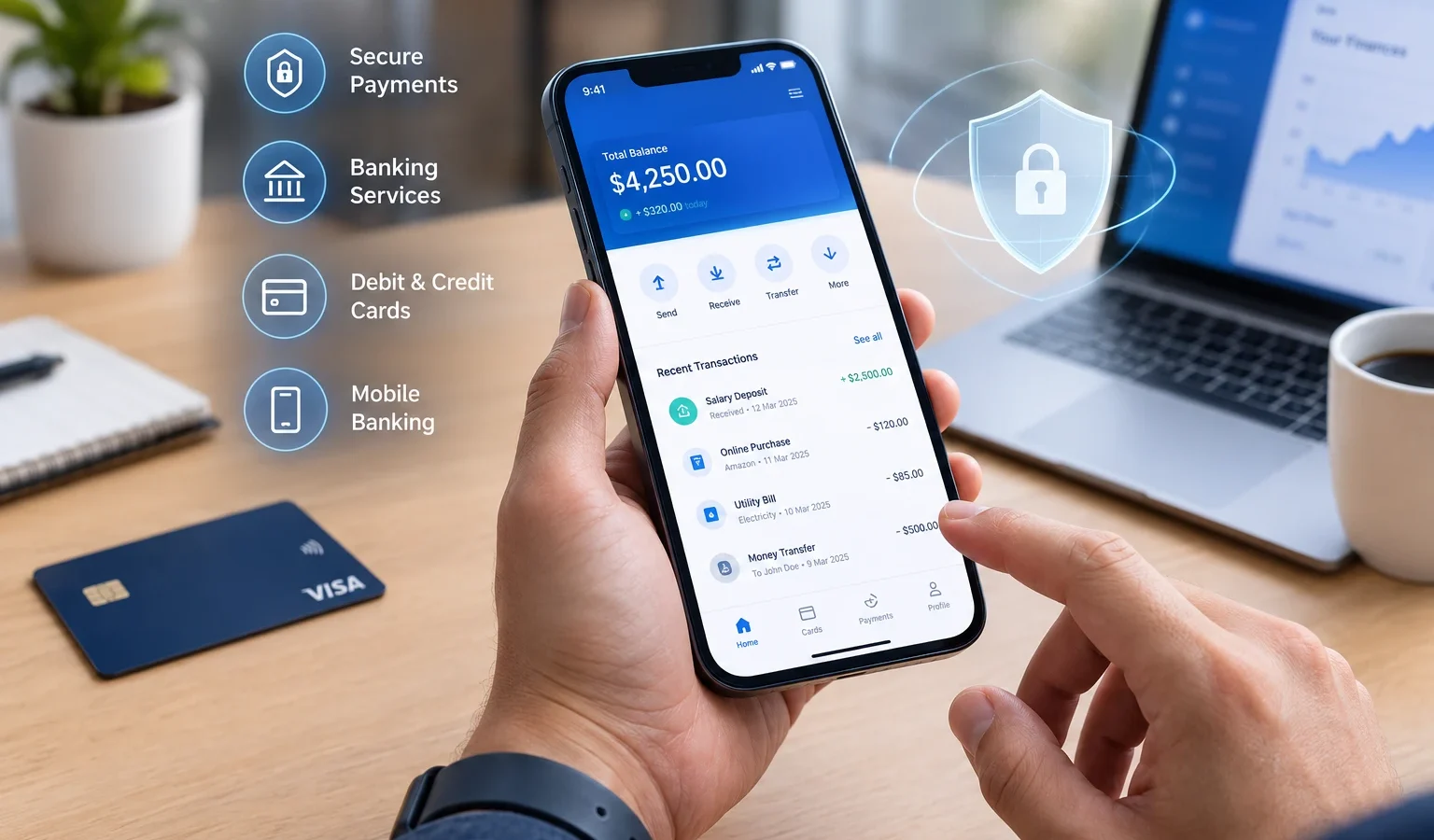
So you want to build a fintech app with secure payment features. Good idea. But the idea isn’t the hard part. It’s everything around it: RBI rules, KYC, card data, and a budget that never matches the first quote. That’s the stuff a fintech app development company in India deals with every single day, and it’s what we’ll go through here. Payments, banking features, compliance, tech stack, cost. No jargon dump, promise.
The market is also already here, btw. UPI did 24.07 billion transactions in September 2026, worth 29.37 lakh crore (NPCI data), up 23% on last year. That’s approximately 800 million per day. Your users already happily pay from their mobiles. But they won’t if your app feels suspicious, so trust is needed from day 1.
What Is a Fintech App?
Any app used by people to send money, save , borrow, invest, or insure money using their smartphone. Like PhonePe and Google Pay. A neobank is a banking app. A loan app or a mutual fund app also qualifies.
The distinction between payment and banking apps is more significant than many realize. A payment app first and foremost transfers funds from one user to another. Developing a banking app involves handling accounts, statements, cards, and KYC, which increases the workload quickly. Decide which type you want to build before making further plans. You can review our fintech software development projects to see our approach.
Must-Have Secure Payment Features
Think about the last time a payment failed on you. For a few minutes you probably wondered where your money went. Your users feel exactly that, so don’t skip these:
- Several payment modes (UPI, cards, wallets, net banking) through a licensed gateway
- Tokenisation, so raw card numbers never sit on your own servers
- Two-factor login, with fingerprint or face unlock on top
- Fraud alerts that fire on odd amounts, new devices or strange locations
- Clear failure messages and automatic refunds when a payment doesn’t go through
- Transaction limits that the user can set
Core Banking Features to Include
Start with whatever people open a banking app for every week:
- Quick onboarding with eKYC
- Balance, statements and transaction history
- Transfers and bill payments
- Card controls: block, unblock, set limits
- Push alerts for every debit and credit
- In-app support, so nobody has to call a helpline
Our advice? Launch with five or six of these and get them right. Investments, loans and rewards can wait until real users tell you what they want.
Security and Compliance (RBI, PCI DSS, KYC/AML)
This is the part that makes or breaks the app, so let’s keep it simple.
RBI authentication rules. Since April 1, 2026, every domestic digital payment needs two-factor authentication. An SMS OTP can still count as one factor, you just need a second one. The RBI also wants risk-based checks, so an unusual payment gets extra verification while a normal one glides through.
PCI DSS. Does your app store, process or pass on card data? Then this applies to you. A PCI-compliant gateway takes most of that load off your servers.
KYC and AML. Verify identity at onboarding, then keep watching for suspicious activity afterwards. It’s not a one-time job.
Data protection. The DPDP Rules 2025 are rolling out in phases. Consent Manager rules start on November 13, 2026, and the main duties for businesses kick in on May 13, 2027. Build your consent and data-deletion flows early. Don’t leave them for the week before launch.
Also find out whether you need an RBI licence, like payment aggregator or PPI authorisation. It depends on what your app does with money, so talk to a legal advisor before anyone writes code.
On the technical side: TLS for data in transit, AES-256 for data at rest, proper key storage and regular penetration tests.
Recommended Tech Stack
There’s no single right answer, but this mix works for most fintech products:
- Mobile: Kotlin (Android) and Swift (iOS) for bank-grade performance, or Flutter and React Native if you’d rather have one codebase and a quicker launch
- Backend: Java with Spring Boot, Node.js or Python
- Database: PostgreSQL, with Redis for caching
- Cloud: AWS, Azure or Google Cloud, with data hosted in India
- Integrations: a payment gateway, a KYC provider and a fraud-detection engine
Already have a plan? You can hire Android app developers or hire iOS developers separately.
Step-by-Step Development Process
- Define the idea and licences. Who’s it for, and what will it do with their money?
- List your features. Split them into needed now and later.
- Design the UX. Fewer taps to pay, always.
- Build the MVP. Hook up the gateway and KYC as you go, and test along the way.
- Test security. Penetration tests and a compliance review, before a single user touches it.
- Pilot it. Start small and watch for failed payments and drop-offs.
- Improve. Fix what breaks, add what users ask for, keep monitoring.
Fintech App Development Cost in India
So, what will it cost? It depends on features, platforms and compliance. Industry estimates for 2026 look like this:
| What you are building | Estimated cost | Note |
| Fintech MVP | ₹4–8 lakh | Usually takes 4–6 months |
| Neobank-style app | ₹8–20 lakh or more | Takes longer than an MVP |
| Compliance work | Adds 20–40% on top | Added to the build cost |
| After launch: hosting, gateway fees, audits, support, updates | Budget separately | Plan for the first year |
Treat these as ballparks. A simple wallet and a full banking app are very different jobs. And don’t forget the running costs after launch, so keep some budget aside for the first year.
Why Choose Team in India
Fintech isn’t the place to learn on the job. You need people who’ve been through payments, KYC, and security before, who can show you how it’s done without the tech fog. Team in India have a team of mobile app developers working across Android, iOS, and the back end, giving one team the ability to take you from your idea through to launch – and continue working with you afterward. Just tell us your idea and we’ll tell you exactly what it needs.
Conclusion
A great fintech app smooths the payment process and offers comfort when paying. Get the secure payment capabilities, essential banking services, and compliance processes tightened up early, and so the rest gets to be simple. Thinking of building a fintech app? Speak to team in India and we’ll chart the next step!
FAQs
How long does it take to build a fintech app?
A basic MVP usually takes four to six months. A full banking app takes longer.
Do I need an RBI licence?
It depends on your model. Apps that hold customer funds or act as payment aggregators generally need authorisation. Check with a legal advisor first.
Is PCI DSS compulsory?
Yes, if your app stores, processes or transmits card data. A compliant gateway reduces your scope.
How do I keep a payment app secure after launch?
Keep running security tests, update your libraries, watch for fraud patterns and review who has access to customer data.